
Will Taxing the Wealthy Really Fix Income Inequality?

If you pay attention to any political programs or follow any news about the economy and taxes, then you no doubt have heard plenty of debate regarding income inequality. The fact is there is a lot of income inequality in the country. Whether you side with the haves or the have-nots, the fact remains that those on each side of the argument feel they have the right answers.
According to democratic philosophy, the argument goes that if you want to fix income inequality then you have to raise taxes on the wealthy and give more of that money to the poor or middle-class. It might sound like a good plan on the surface, however, a new report shows that in reality, if you really want to close the income gap between the wealthy and lower income classes, then policy changes are much more effective.
That’s right. According to a study just recently released by the Competitive Enterprise Institute, the difference between the economic brackets among the top and bottom levels is not as important as the living standard of those in the lowest economic levels. The study also noted that raising the minimum wage would end up having a negative effect because it would help drive the unemployment rate even higher.
According to one of the study’s co-authors, Ryan Young, giving people access to economic and job opportunities that will boost their standard of living is more important than focusing on the income gap. Young also said: ““Policy reforms that help poor people include access to affordable energy, access to capital for entrepreneurs, ending occupational licensing restrictions, an honest price system, and overhauling a range of regulatory barriers.”
http://dailycaller.com/2016/05/25/report-taxing-the-rich-wont-fix-income-inequality/
Mastering Business Growth with Howard Shore
Howard Shore, Founder and CEO of Activate Group Inc. discusses managing, even mastering, business growth and the challenges growing quickly can present on Alan Olsen‘s American Dreams Show. Transcript: Alan Olsen Welcome to American Dreams. My guest today is Howard Shore. Howard, welcome to today’s show. Howard Shore Alan, thank you for having me. Alan…
Prosperity and Self-Reliance Zealot Steve Alder
From North America to Ghana, Africa, Steve Alder, President of Ensign Global College (www.ensign.edu.gh), sits down to discuss how a professor helps to build global prosperity and self-reliance on Alan Olsen‘s American Dreams Show. Transcript: Alan Olsen Welcome to American Dreams I’m visiting here today with Steve Alder. Steve, welcome to today’s program. Steve Alder Thank…
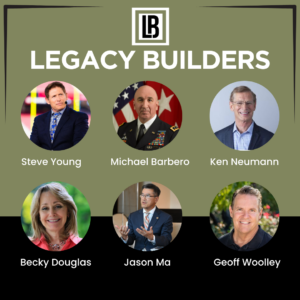
Steve Young on Building an Epic Family Legacy
Retired 49r Steve Young Discusses Building a Family Legacy at the Legacy Builders Event on May 15, 2024 As GROCO celebrates three decades of excellence in family office tax and advisory services, we have developed the Legacy Builders to stands as a testament to the firm’s enduring vision: to transform wealth into a powerful tool…
Leadership, Duty, Honor & Country With Lt. Gen. Mike Barbero
Retired US Army Lieutenant General, Michael D. Barbero, discusses leadership, service, duty, honor, and country on Alan Olsen‘s American Dreams Show. Transcript: Alan Olsen Hi, this is Alan Olsen and welcome to American Dreams. My guest today is General Michael Barbero. General, welcome to today’s show. Mike Barbero Thanks, Alan, how are you? Thanks for having me. It’s…