
Artificial Intelligence or Authentic Creation? The Debate Over Copyrighting AI Art.
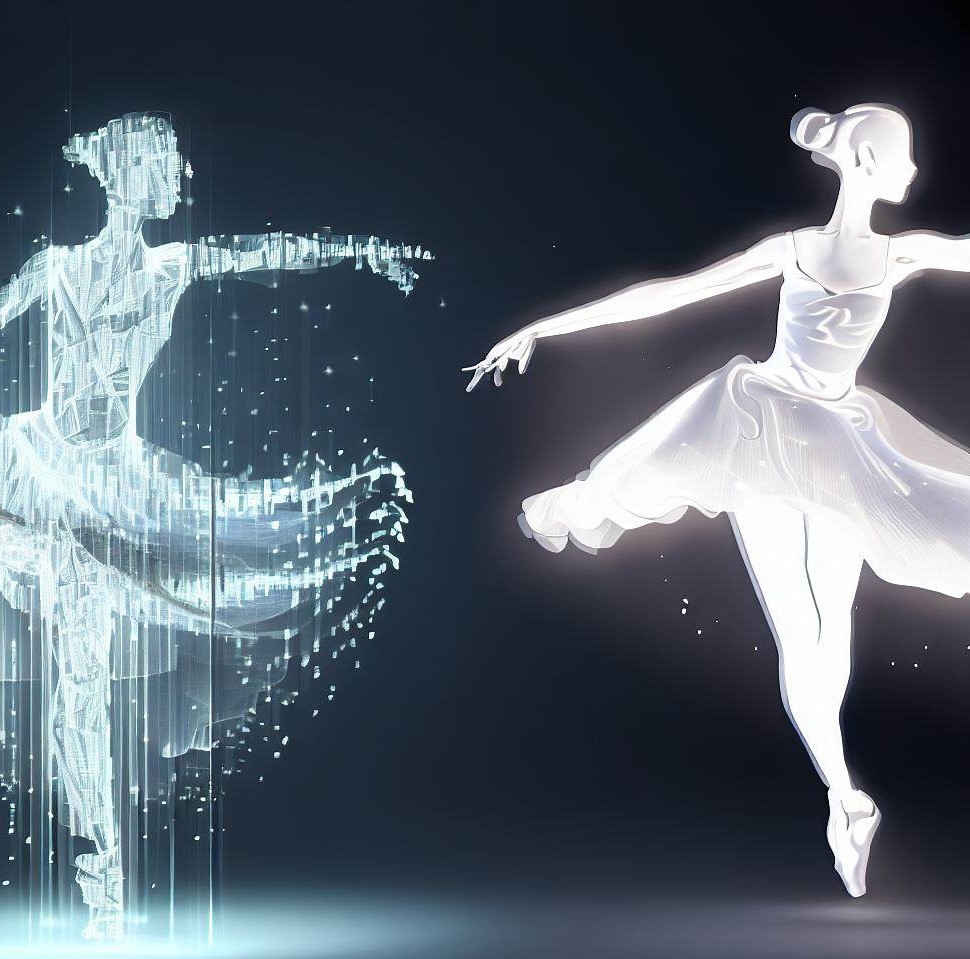
Is artificial intelligence (AI) created art, art?
In an age where technological innovation permeates every facet of our lives, the intersection of art and artificial intelligence presents a legal and ethical quagmire. The recent ruling by US District Court Judge Beryl A. Howell declaring AI-generated artwork ineligible for copyright has ignited heated debates among artists, tech enthusiasts, and legal experts.
-
Artificial Intelligence as an Extension of the Creator
The rapid evolution of artificial intelligence has been nothing short of astounding, transitioning from an academic niche to a cornerstone of industries worldwide. But at its core, AI remains deeply human. As Dr. Fei-Fei Li eloquently highlighted in her New York Times article, “Despite its name, there is nothing ‘artificial’ about this technology — it is made by humans, intended to behave like humans and affects humans.”1 The very algorithms and data structures that empower these systems are a direct reflection of human intent and design.
As AI continues to shape our world, it is crucial to remember that it’s not an autonomous entity operating in isolation. It’s a tool, crafted by human hands, mirroring human values, and aiming to augment human capabilities.
-
Consistency with Other Tools
Historically, artists have always utilized tools to aid their creative process. Whether it’s Leonardo da Vinci’s brush or a modern graphic designer’s Adobe Photoshop, tools have been instrumental in bringing artistic visions to life. If we accept digitally-edited photos as original works, why should AI-generated art be any different?
-
Distinguishing Artificial Intelligence from Animals
Judge Howell’s reference to the “monkey selfie” case might be misleading for some. Animals act on instinct, whereas AI operates based on logic and instructions provided by humans. While a monkey might accidentally snap a selfie, AI creates art based on its human-derived programming.
-
Rewarding Innovation
Denying copyright for AI-generated works could stifle innovation. As AI researcher Andrew Ng puts it, “Much of human progress was sparked by tools: The plow, the printing press, the computer.”2 By not recognizing the copyright of AI-generated work, we risk disincentivizing creators from pushing the boundaries of what’s possible.
-
Complexity of AI Training
Training an AI model is no simple task. It requires expertise, curated datasets, and numerous decisions that influence the end result. For example, Google’s DeepDream, which transforms images in unique, often psychedelic ways, relies on layers of data and algorithmic choices made by its creators3. Each AI-generated piece is a testament to that labor and expertise.
-
Economic Implications
In a world where AI-generated art lacks protection, the market could be inundated with freely available content, undermining the value of human-made artwork. This could have severe repercussions for artists trying to monetize their creations in a rapidly digitizing economy.
-
Precedent for Derivative Works
The Copyright Act has provisions for derivative works, which, while based on existing creations, offer something new or transformative. Consider the case of “The Wind Done Gone,” a retelling of “Gone with the Wind” from a different character’s perspective. Though controversial, it was deemed transformative enough to warrant its own copyright4. AI-generated content, with its fresh perspectives, might deserve similar consideration.
-
Subjectivity of “Human Touch”
Defining the “guiding human hand” is subjective. Take, for instance, an artist who uses AI to produce a hundred sketches, then manually selects and refines one. Doesn’t that process, that selection, embody the human touch?
As technology continues to evolve, it’s essential for our legal systems to adapt and address the unique challenges posed by innovations like AI. The debate over copyrighting AI art isn’t just about legal technicalities; it’s a reflection of our changing relationship with technology and creativity in the 21st century.
Stephen Hawking once warned, “We stand on the threshold of a brave new world. It is an exciting, if precarious, place to be and we benefit from it.”5 As we continue to grapple with these complex issues, it’s crucial to approach them with an open mind and a willingness to adapt.
Sources:
Footnotes
- Li, Fei-Fei. “Human-Centered Artificial Intelligence.” Stanford HAI, 2018.
- Ng, Andrew. “The State of Artificial Intelligence.” TEDxBrussels, 2017.
- Mordvintsev, Alexander, et al. “DeepDream – a code example for visualizing Neural Networks.” Google AI Blog, 2015.
- “Suntrust v. Houghton Mifflin Co.” United States Court of Appeals, Eleventh Circuit, 2001.
- Hawking, Stephen. “Brief Answers to the Big Questions.” John Murray, 2018.




Jonathan Cotten on The Business of Character
Why Character Is the Ultimate Business Strategy In the rush to scale fast, dominate markets, and chase the next big exit, the word “character” often feels like an afterthought in business circles. Jonathan Cotten, however, believes it belongs at the very center of any business worth building. Cotten, CEO of Easystep Enterprises and author of The…

Faith, Freight & “Slaying the Tomb”
How the Moscrips Drove From Freight Tech to Faith-Fueled Media When Scott Moscrip launched Truckstop.com from a spare bedroom in 1995, he didn’t just build a freight-matching marketplace—he rewired a blue-collar industry for the Internet age. Thirty years, five kids, and one mayoral term later, the Idaho technologist and his wife, Carmen, are chasing an…
From the Streets to Self-Reliance
How Joseph Grenny’s Other Side Village Is Rewriting the Homelessness Playbook A 2 a.m. Alarm and a Box of World-Class Doughnuts At two o’clock each morning in downtown Salt Lake City, former rough-sleepers slip into spotless aprons, fire up industrial mixers, and begin turning out pillowy brioche rings glazed with passion-fruit icing and drizzled…
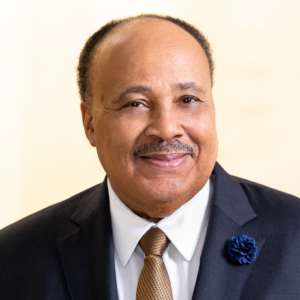
Building a Legacy: A Fireside Chat with Martin Luther King III
In a thought-provoking fireside chat at our Legacy Builder’s Conference, Martin Luther King III shared profound insights on the concept of legacy, leadership, and the moral imperatives facing society today. Speaking with Alan Olsen, he reflected on his father’s enduring impact and his own efforts to carry forward that mission in today’s world. Defining His…