
IRS Is Carefully Watching Bitcoin and Other Cyber Currency

Big Brother is watching. Always watching. In this case, Big Brother is the IRS and you might be surprised what they’re looking into now. Although, when it comes to the IRS, nothing should surprise us.
Have you ever heard of Bitcoin? It’s one of a handful of virtual currencies that making buying and selling things in the digital age much easier. Essentially, virtual currencies are exactly that: virtual. They are not tangible, their value can fluctuate constantly and they only exist in cyberspace. But that’s not stopping the IRS from taking a closer look at how it can regulate them.
That’s because it appears that virtual currencies could be a new way for tax evaders to hide money “overseas.” Simply put, virtual currencies, like Bitcoin, offer secrecy with no trail to follow. That’s why the IRS has created a team of special agents to focus on tracking these virtual currencies. So if you’re trying to hide money through Bitcoin, beware.
To use Bitcoin you have to have a virtual wallet, as well as public addresses and private keys. What many people who use Bitcoin don’t know is that every transaction they make with Bitcoin is added to a record book known as a block chain. That means to review these transactions the IRS only has to access the block chain. It then follows that chain back to the public address that was used for the original Bitcoin transaction. The IRS then uses whatever measures it takes to link the address to the identity of the user.
That means using these virtual currencies may not actually be as secretive as users thought they were. So if you’re using one or more of these types of currencies, then as always beware of the taxman.

Jonathan Cotten on The Business of Character
Why Character Is the Ultimate Business Strategy In the rush to scale fast, dominate markets, and chase the next big exit, the word “character” often feels like an afterthought in business circles. Jonathan Cotten, however, believes it belongs at the very center of any business worth building. Cotten, CEO of Easystep Enterprises and author of The…

Faith, Freight & “Slaying the Tomb”
How the Moscrips Drove From Freight Tech to Faith-Fueled Media When Scott Moscrip launched Truckstop.com from a spare bedroom in 1995, he didn’t just build a freight-matching marketplace—he rewired a blue-collar industry for the Internet age. Thirty years, five kids, and one mayoral term later, the Idaho technologist and his wife, Carmen, are chasing an…
From the Streets to Self-Reliance
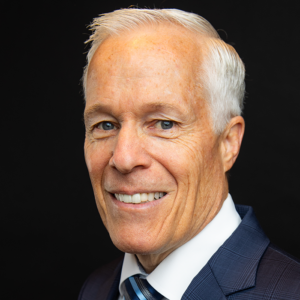
How Joseph Grenny’s Other Side Village Is Rewriting the Homelessness Playbook A 2 a.m. Alarm and a Box of World-Class Doughnuts At two o’clock each morning in downtown Salt Lake City, former rough-sleepers slip into spotless aprons, fire up industrial mixers, and begin turning out pillowy brioche rings glazed with passion-fruit icing and drizzled…
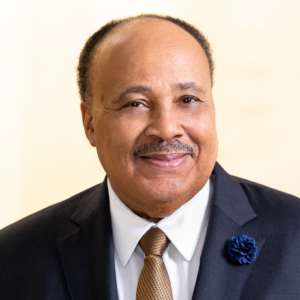
Building a Legacy: A Fireside Chat with Martin Luther King III
In a thought-provoking fireside chat at our Legacy Builder’s Conference, Martin Luther King III shared profound insights on the concept of legacy, leadership, and the moral imperatives facing society today. Speaking with Alan Olsen, he reflected on his father’s enduring impact and his own efforts to carry forward that mission in today’s world. Defining His…