
The State of the Private Equity Industry—Is It All Down Hill From Here?

In the past private equity has been a solid way of investing taking in trillions of capital, but with the ever changing world we live in, what is the state of the industry? Private equity investments typically consist of money being placed in a company by venture capital firms, private equity firms or angel investors. These are companies that are not publicly traded on any stock exchange and typically they are looking to launch, grow or prepare for a buyout. The money invested is typically aimed at expanding or creating new products or in some cases to fund a restructuring of the company. Private equity is a powerful force in the success of private companies that are not publicly traded. So what is the state of the private equity industry?
The Private Equity Industry Is Healthy
To answer that question, I spoke with Jonathan Coslet, Chief Investment Officer, and Senior Partner of TPG Capital. Jonathan explained that the private equity industry, like all industries, “is maturing but the core raison d’etre for the industry is growing rapidly and that’s because of our core client, our pension funds and our sovereign wealth funds in particular.” Jonathan compared the private equity industry to state governments. He said whereas the average state government is getting about 7-8 percent annually on its investments, the average firm in the private equity industry has returned about 13 or 14 percent every year over the last 30 years. “So it’s been delivering very strong returns against a US stock market that’s maybe 7 or 8 percent. So the need for the pension funds, sovereign wealth funds and insurance companies endowments to outperform fixed income securities and regular way public equities is creating real demand for our services.” Because of these factors the industry is growing and today the private equity industry has about $2 trillion of capital under its control.”
Growth Investing
I asked Jonathan what investment strategies he prefers the most. He mentioned two generic approaches that he would take as an investor: growth and inflection. He explained growth to be the following: “there’s going to be a lot of folks who are 65 and 85 or older so there’s going to be a huge demand for healthcare services. So that’s just a secular growth that’s driven demographically and I need to figure out which part of that sector I want to get in front of because it has the most growth and has a supply-demand imbalance.” It’s important to get in front of something with a growing demand while supply is still lagging because this gives you pricing power.
Inflection Investing
On the other hand, with inflection investing it’s not the slope of the curve, it’s the second derivatives, or the rate of change. “The slope is inflecting up so being in front of something that’s about to change and that usually means an industry that’s being disrupted in transition. It happens to be that healthcare has both characteristics: it’s growing and it’s changing.” When you look for something that has both growth and dynamic change together you find the “hot spots” of investing and if done right it can lead to tremendous success.
Check out my interviews with Jonathan Coslet below. For more interviews with Jonathan Coslet click here!
Jonathan Coslet- Investment Strategies
Jonathan Coslet- The State of Private Equity
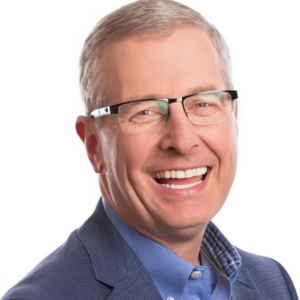
Jonathan Cotten on The Business of Character
Why Character Is the Ultimate Business Strategy In the rush to scale fast, dominate markets, and chase the next big exit, the word “character” often feels like an afterthought in business circles. Jonathan Cotten, however, believes it belongs at the very center of any business worth building. Cotten, CEO of Easystep Enterprises and author of The…

Faith, Freight & “Slaying the Tomb”
How the Moscrips Drove From Freight Tech to Faith-Fueled Media When Scott Moscrip launched Truckstop.com from a spare bedroom in 1995, he didn’t just build a freight-matching marketplace—he rewired a blue-collar industry for the Internet age. Thirty years, five kids, and one mayoral term later, the Idaho technologist and his wife, Carmen, are chasing an…
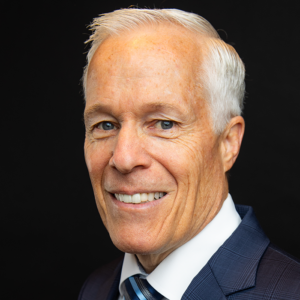
From the Streets to Self-Reliance
How Joseph Grenny’s Other Side Village Is Rewriting the Homelessness Playbook A 2 a.m. Alarm and a Box of World-Class Doughnuts At two o’clock each morning in downtown Salt Lake City, former rough-sleepers slip into spotless aprons, fire up industrial mixers, and begin turning out pillowy brioche rings glazed with passion-fruit icing and drizzled…
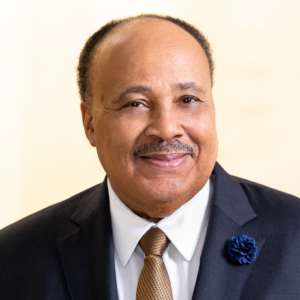
Building a Legacy: A Fireside Chat with Martin Luther King III
In a thought-provoking fireside chat at our Legacy Builder’s Conference, Martin Luther King III shared profound insights on the concept of legacy, leadership, and the moral imperatives facing society today. Speaking with Alan Olsen, he reflected on his father’s enduring impact and his own efforts to carry forward that mission in today’s world. Defining His…