
Succeeding Against All Odds

Just about every startup business or entrepreneur faces tough odds, which at certain points can seem almost insurmountable. Achieving success is always gratifying, but when you achieve success against all odds, that satisfaction can feel even greater. Being able to overcome huge odds and obstacles is never easy, but many people have what it takes to keep pushing against those odds and eventually beating them. I recently spent some time visiting with one such person, who overcame great odds and helped Oracle become a huge success in the software industry. Noosheen Hashemi was a recent college graduate when she joined Oracle back in the 1980s. However, it didn’t take her long to establish herself as one of the company’s most valuable assets, despite her youth and inexperience.
Currently Noosheen serves as the President of H.A.N.D. Foundation. She is also an Advisor at Atheer Labs, Inc. and is a Philanthropist with a passion for entrepreneurship and economic development. Noosheen is also an independent angel investor and advisor in the software industry. As mentioned, she also played a big a role in the successful turnaround of Oracle, where she worked and held various management positions between 1985 and 1995. Noosheen took an active part in the company’s rise in the industry. She was appointed Director of Finance and Administration in 1988 and named Vice President in 1990. She also led the expansion of Oracle services as VP of Marketing and Business Development for Oracle’s Worldwide Education, and in 1991, she won Oracle’s “Against All Odds Award.”
Keys to Achieving Success
So just how did Noonsheen overcome the odds and all the competing goals of the company in order to become successful? She explained to me that at one point she was running 12 departments at the same time. She worked 18 hour-days, seven days a week for seven years and even pulled all-nighters, where she would work till 5:00 am then be back at 8:00 am for her next round of meetings. So how did she balance all these responsibilities? “It was intuition.” It was also some very basic things, which included “always serve in the best interest of the company above all else. So the loyalties were always to Oracle and not to any one person. It was always in service of efficiency and constant, continuous process improvement. It was always to be ethical, proper and then you add a lot of hard work.”
Testing Your Limits
Noosheen said it was a lot of intuition and you just knew what you had to do. Oracle was a great place to work because they put a lot of trust in young people to figure it out. They didn’t sit you down and explain how it had to be done, they gave you the assignment then trusted you to figure it out on your own. “As the company tested its limits each individual was testing there’s.”
Chester Wooley on Where Philanthropy and Venture Capital Meet
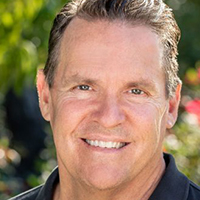
Geoff “Chester” Wooley, Co-founder Patamar Capital and current board member of SKS Microfinance, India’s largest microfinance bank, discusses where philanthropy and venture capital meet on Alan Olsen‘s American Dreams Show. Transcript: Geoff Woolley 0:00 Philanthropy and a family office’s investing is quite separate from each other. Depending on the size of the family office, its foundation or…
The Future of ESG and Impact Investing with Michael Meehan
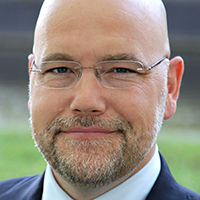
Michael Meehan, Co-founder, Canoe Carbon, Forum for Impact, and former CEO, GRI discusses the future of ESG and impact investing on Alan Olsen‘s American Dreams Show. Transcript: Alan Olsen Michael, you have a remarkable story. And for the listeners here, can you share your background and how it got you to where you are today? Michael…

Becky Douglas on Transforming Leprosy Colonies in India
Becky Douglas, founder of Rising Star Outreach, a non-profit dedicated to saving and transforming the lives of children and their parents affected by leprosy in India, discusses how it became reality on Alan Olsen’s American Dreams Show. Rising Star Outreach born from tragedy. Becky’s journey to helping leper colonies in India began with a personal tragedy that transformed…
Unveiling Entrepreneurial Success with Randi Brill
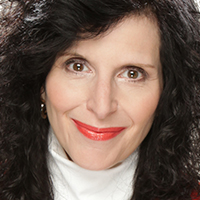
Randi Brill, best-selling author and CCO of Just Call Randi Design Agency discusses unveiling entrepreneurial success on Alan Olsen‘s American Dreams Show. Transcript: Alan Olsen Hi, this is Alan Olsen and welcome to American Dreams. My guest today is Randy brill. Ready welcome to today’s show. Randi Brill Thank you, Alan. I’m glad to be here. …