
Could You Lose Health Care if You Don’t File a Tax Return?

There’s been no shortage of confusion since the Affordable Healthcare Act became a law. Likewise, there has been no shortage of discontent with the bill, either. Obamacare, as it is widely known, continues to find ways to leave people in the dark not only about their healthcare, but also about their taxes. So what’s the latest issue surrounding Obamacare?
It turns out that some people, who would normally not be required to file a tax return, may actually need to file a return, after all; that is if they want to keep receiving their health care tax credit subsidies. That’s true, according to the new health care law, even if you would normally be exempt from filing a return.
The White House and the IRS are hopeful that the nearly 1.8 million U.S. households that received those tax credit subsidies to help pay their insurance premiums that haven’t yet filed will be asking for an extension very soon. While the monthly average tax credit was only about $270, with nearly nine million taxpayers taking advantage of those credits that is a lot of money to be giving up for next year. Add it all up and it totals about $28.4 billion.
The IRS is reportedly attempting to alert those who might still need to file a return. Therefore, if you receive a letter from the IRS regarding Obamacare make sure you give it a good reading. Of course, you should never throw any letter from the IRS away without reading it first. And if you get any kind of letter from the IRS that you’re not sure about, you can always contact our office at 1-877-CPA-2006.

Jonathan Cotten on The Business of Character
Why Character Is the Ultimate Business Strategy In the rush to scale fast, dominate markets, and chase the next big exit, the word “character” often feels like an afterthought in business circles. Jonathan Cotten, however, believes it belongs at the very center of any business worth building. Cotten, CEO of Easystep Enterprises and author of The…

Faith, Freight & “Slaying the Tomb”
How the Moscrips Drove From Freight Tech to Faith-Fueled Media When Scott Moscrip launched Truckstop.com from a spare bedroom in 1995, he didn’t just build a freight-matching marketplace—he rewired a blue-collar industry for the Internet age. Thirty years, five kids, and one mayoral term later, the Idaho technologist and his wife, Carmen, are chasing an…

From the Streets to Self-Reliance
How Joseph Grenny’s Other Side Village Is Rewriting the Homelessness Playbook A 2 a.m. Alarm and a Box of World-Class Doughnuts At two o’clock each morning in downtown Salt Lake City, former rough-sleepers slip into spotless aprons, fire up industrial mixers, and begin turning out pillowy brioche rings glazed with passion-fruit icing and drizzled…
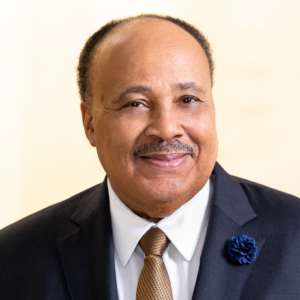
Building a Legacy: A Fireside Chat with Martin Luther King III
In a thought-provoking fireside chat at our Legacy Builder’s Conference, Martin Luther King III shared profound insights on the concept of legacy, leadership, and the moral imperatives facing society today. Speaking with Alan Olsen, he reflected on his father’s enduring impact and his own efforts to carry forward that mission in today’s world. Defining His…