
Tax Relief Courtesy of Hurricane Harvey

While Hurricane Harvey continues to devastate the Gulf Coast, Texans can expect to receive a little extra relief this upcoming tax year from Uncle Sam. Taxpayers in the federally declared disaster area have the option of claiming disaster-related casualty losses for either the year that the event occurred or the year prior. This means that those whose homes were affected by wind or flood damage can deduct the damages from either this year or the last year’s tax returns. In many cases, amending last year’s returns results in an immediate tax refund which can be then used to live on or begin repairs. However, the option of amending last year’s return may not be for everyone since the IRS does have two rules that must be followed for casualty claims. The first is that the amount of damage claimed must first be deducted by $100. Then the total casualty losses must be reduced by 10% of your adjusted gross income. If you qualify for writing off a loss the process is fairly simple. First, you will need the proper forms. These are the long Form 1040, Form 4684 to determine and report your casualty loss and Schedule A to itemize your loss deduction. If you are planning on amending your 2016 return you will need to use Form 1040X instead of the long Form 1040. You will then need to determine how the damages incurred have affected your property’s fair market value. This is done through determining how much your property is worth immediately prior to the disaster and comparing it to what it is worth immediately after the disaster. The latter part of this will need to be through a professional appraiser. The difference between these two amounts is your loss from casualty. You can then utilize Form 4684 to determine the deductible amount of your casualty loss.
If you have insurance on your property you must first file a claim to use the damage as a casualty loss. Any money that you receive from the insurance company must then be deducted from the casualty loss amount. All insurance payments must be used to repair, or replace your property or any excess could be counted as a taxable gain to you.
Throughout all of this remember to keep documentation of everything! While the IRS may give disaster victims some leeway, they do require that casualty losses be substantiated and supported. This will also be of great value to you if you ever get audited in the future.
Consult with your tax advisor to determine which option would be best for you and your family.
For more on how to claim your casualty losses (click here).
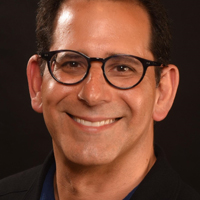
Mastering Business Growth with Howard Shore
Howard Shore, Founder and CEO of Activate Group Inc. discusses managing, even mastering, business growth and the challenges growing quickly can present on Alan Olsen‘s American Dreams Show. Transcript: Alan Olsen Welcome to American Dreams. My guest today is Howard Shore. Howard, welcome to today’s show. Howard Shore Alan, thank you for having me. Alan…

Prosperity and Self-Reliance Zealot Steve Alder
From North America to Ghana, Africa, Steve Alder, President of Ensign Global College (www.ensign.edu.gh), sits down to discuss how a professor helps to build global prosperity and self-reliance on Alan Olsen‘s American Dreams Show. Transcript: Alan Olsen Welcome to American Dreams I’m visiting here today with Steve Alder. Steve, welcome to today’s program. Steve Alder Thank…

Steve Young on Building an Epic Family Legacy
Retired 49r Steve Young Discusses Building a Family Legacy at the Legacy Builders Event on May 15, 2024 As GROCO celebrates three decades of excellence in family office tax and advisory services, we have developed the Legacy Builders to stands as a testament to the firm’s enduring vision: to transform wealth into a powerful tool…
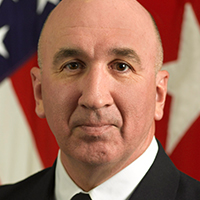
Leadership, Duty, Honor & Country With Lt. Gen. Mike Barbero
Retired US Army Lieutenant General, Michael D. Barbero, discusses leadership, service, duty, honor, and country on Alan Olsen‘s American Dreams Show. Transcript: Alan Olsen Hi, this is Alan Olsen and welcome to American Dreams. My guest today is General Michael Barbero. General, welcome to today’s show. Mike Barbero Thanks, Alan, how are you? Thanks for having me. It’s…