
Voters in Multiple States Choose Higher Taxes for the Wealthy
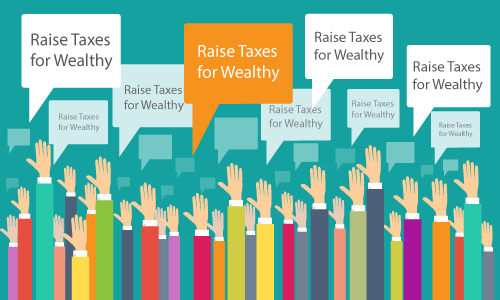
Of course, the big news from the election earlier this month was that Donald Trump shocked the world and defeated Hillary Clinton in the race to become the 45th president of the United States. However, there were several other important national, as well as local, election races and issues that were decided on November 8th. Not the least of which were several state measures aimed at raising taxes on high net worth individuals.
To that end, voters in both California and Maine decided that the rich needed to pay more taxes. In Maine, the vote to raise the state’s top tax rate from 7.15 percent to 10.15 percent was extremely close, passing by a narrow 50.4 percent to 49.6 percent margin. That means Maine will have the second highest top tax rate in the country in 2017, surpassing Oregon, which was number two in 2016 at 9.9 percent.
In California, meanwhile, the vote wasn’t even close, with 62 percent voting to extend temporary tax hikes already in place. Proposition 55 extended the hikes originally implemented in 2012 with Proposition 30. That means top earners, those who make $1 million or more a year, will continue to pay a tax rate of 13.3 percent at least until 2030. California will continue to have the highest tax rate for top earners in 2017.
So, while all signs point to Donald Trump lowering the federal tax rates, if you live in California or Maine and you’re a top earner, you won’t see any relief in the coming years in your state taxes.
http://www.forbes.com/sites/ashleaebeling/2016/11/10/voters-okay-state-income-tax-hikes-for-the-rich/#71480a7b16d0
Chester Wooley on Where Philanthropy and Venture Capital Meet
Geoff “Chester” Wooley, Co-founder Patamar Capital and current board member of SKS Microfinance, India’s largest microfinance bank, discusses where philanthropy and venture capital meet on Alan Olsen‘s American Dreams Show. Transcript: Geoff Woolley 0:00 Philanthropy and a family office’s investing is quite separate from each other. Depending on the size of the family office, its foundation or…
The Future of ESG and Impact Investing with Michael Meehan
Michael Meehan, Co-founder, Canoe Carbon, Forum for Impact, and former CEO, GRI discusses the future of ESG and impact investing on Alan Olsen‘s American Dreams Show. Transcript: Alan Olsen Michael, you have a remarkable story. And for the listeners here, can you share your background and how it got you to where you are today? Michael…

Becky Douglas on Transforming Leprosy Colonies in India
Becky Douglas, founder of Rising Star Outreach, a non-profit dedicated to saving and transforming the lives of children and their parents affected by leprosy in India, discusses how it became reality on Alan Olsen’s American Dreams Show. Rising Star Outreach born from tragedy. Becky’s journey to helping leper colonies in India began with a personal tragedy that transformed…
Unveiling Entrepreneurial Success with Randi Brill
Randi Brill, best-selling author and CCO of Just Call Randi Design Agency discusses unveiling entrepreneurial success on Alan Olsen‘s American Dreams Show. Transcript: Alan Olsen Hi, this is Alan Olsen and welcome to American Dreams. My guest today is Randy brill. Ready welcome to today’s show. Randi Brill Thank you, Alan. I’m glad to be here. …